Case Study

The Hunger Games – Gary Ross (2012)
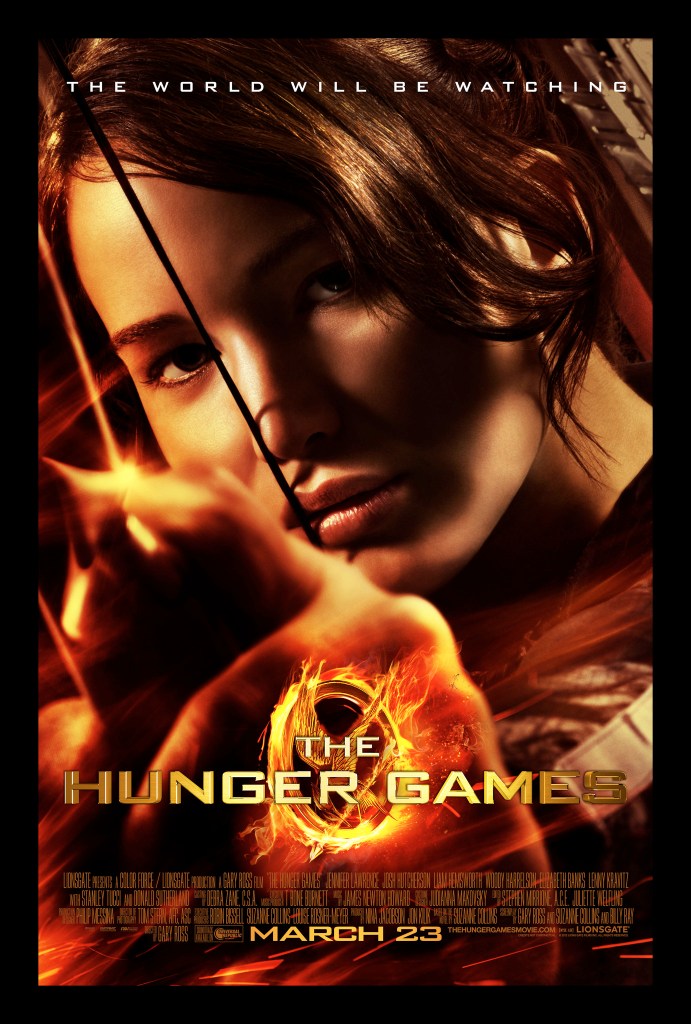
In this case study we will be examining the Hunger Games closely on the production and distribution of this film. The reason I picked this movie was because of the technology and simulation aspect that is used for the contestants in the games. They play in a simulation orchestrated by the capitol.

Director & Producer

The director of this film is Gary Ross. His major films were The Hunger Games Series and Oceans 8. The executive producer is Suzanne Collins, which was the author of the book and scriptwriter for the film. She took on many roles in the production of the film.

Budget, Production, Distribution

The budget of this film was considered a mid-budget of $78 million. And the film gross or box office was $694.4 million. So it overly exceeded it’s budget.

The production of movie was filmed. I think this was to give the movie a realistic feel. It showed how America would look in a dystonia society without it being filmed in a studio or on digital. This effected production because the movie was able to connect with the audience. Having the movie being filmed in the countryside and rural society makes the movie more inviting. The film was mostly on location in North Carolina, since it had both urban and rural settings. The running time of the movie was 142 minutes. The complications that were faced during production was the idea of children killing one another for entertainment in the movie. Making a movie with this principle and still make it appealing for the audience was a challenge for movie producers and the directors of production. Violence and brutality was going to be main themes, since the movie mimicked the plot of the book, in the film but they still had to make the film meet the criteria of the overall rating of PG-13. This film was produced in an leading independent film company called Lionsgate they took a chance at making this film, since it was not big five produced movie. Another producer that has a hand in making this film was Color Force . It helped to produce the Hunger Games series, and the children’s book series Diary of a Wimpy Kid, and recent big box office movie Crazy Rich Asians, This company doesn’t specify in a genre, although they make movies that appeal to younger audiences. Lionsgate, also distributed this film. The company has produced the Twilight Saga Series, the Divergent Series, the horror film series Saw, musical La La Land, and many other big films.  They make many different films from science fiction, horror, mystery, action, fantasy, and romance. So they do not specialize in a certain type of film.

Marketing and Exhibition

Some marketing techniques this company used was merchandising, and using a campaign with fast food franchise Subway “Win Your Victory Tour”. Also social network sites such as Tumblr, having a blog on Capital Couture, and a interactive contest on Twitter. They gave away 80,000 papers and promoted the movie on 50 magazine covers.  In addition they had a Capitol Collection with Covergirl. However, the film did make money from it’s promotional strategies, it didn’t have any big-ticket promotion that are seen with other movies. 

Exhibition Methods:

The movie could be seen in theaters (theatrical). Later they used non-theatrical platforms such as DVD/BluRay, television,  PrimeVideo, Google Playu, Youtube TV,  and  iTunes. If someone was wanting to view the film today, they could watch it from these streaming services or watch it on disk. 

Sources:

https://www.google.com/amp/s/decider.com/what-to-watch/the-hunger-games/amp/

https://www.albany.edu/honorscollege/files/Niles_Honors_Thesis.pdf 

https://www.google.com/amp/s/www.vox.com/platform/amp/culture/2018/12/19/18136112/hunger-games-10-year-anniversary

https://www.google.com/amp/s/www.entrepreneur.com/amphtml/223354 

https://www.nytimes.com/2012/03/19/business/media/how-hunger-games-built-up-must-see-fever.html

https://www.pinnaclepromotions.com/blog/the-hunger-games-marketing-strategies-and-takeaways-2/

https://www.wired.com/2013/11/catching-fire-marketing/

https://m.imdb.com/title/tt1392170/

https://www.lionsgate.com/movies

https://www.lionsgate.com/about

https://www.imdb.com/search/title/?companies=co0212151

https://m.imdb.com/title/tt1392170/fullcredits

https://www.hollywoodreporter.com/news/why-hunger-games-catching-fires-651660

https://m.the-numbers.com/movies/franchise/Hunger-Games

https://m.imdb.com/title/tt1392170/locations

https://www.hostelworld.com/blog/how-to-find-every-single-hunger-games-location-in-real-life
Group Discussion #2

The group and I met up at McDonald’s to discuss our film, they offer free wifi and the guys wanted something other than Dunkin’ Donuts lol. Anyways, here we discussed our film and answered some proposed questions, the script that was written by one of my group members Kevin, and how we are going to get finance for our film.

What does the script look like for your film? You should have at least a basic summary of the film in order to pitch it. Research and skim screenplays for other films in your genre to get an idea of what they look like (this is also a great exercise for scripting your opening sequence).

The script is a sample, it has room for development.  The main summary for our film is that a detective and a hacker are forced to team up to find who hacked a popular simulation. However, the owners of the simulation are mysterious, and there seems to be more to the hack than what is initially let on. The two characters, the detective and the hacker, have directly contrasting personalities. The detective is dry and constantly serious, and is constantly monologuing to himself about his life. In contrast, the hacker is sarcastic and socially-oblivious, constantly breaking the detective’s train of thought. Everything that he says is either sarcastic, a joke, or not extremely helpful. He expresses his unhappiness about being paired up with the detective a lot more openly, and is a bit of a jerk to the detective. These two personalities will help accomplish the goal of catching the ultimate hacker.

What is your “brand” or “mission statement” for your film? What are you striving towards? What are you trying to achieve with your story? Your brand will be important for choosing a production company and pitching your film.

One Detective. One Hacker. Join forces to bring justice. 

We are going to have a slightly comedic image, as our two main characters are strongly contrasting in character. We are striving to have the detective be extremely serious and gritty in this world, but that this noir image is constantly subverted with the hacker’s ridiculous antics. It’ll be a contrast in tones for comedic effect. We want to have some action in the movie, which will probably be split with physical action done by the detective and ‘hacking’ done by the hacker (shocker). The action will also be the action when the detective and the hacker meet face to face with shared enemy.

What are some production companies that specialize in films similar to yours? Which of them would be ideal choices for producing your film?

Warner Brothers and A24, these would be ideal companies because they have produced Inception, The Matrix, The Dark Knight, and Detective Pikachu. With Warner Bros., they have a lot of history making darker science fiction films, or make deals with independent affiliates that fund these types of films. However, a lot of independent film companies have created the most famous tech-noir films, and with A24 being a major independent film company, they could also be another opportunity. This would be a great opportunity because Warner Brother has major money, and money to take a risk to produce a great film.

Do you plan to produce with a large studio or a smaller, independent production company? Why?

Large production company. Warner Bros. would allow us to have a lot more funds to have good special effects, and the prestige with having a large studio would likely increase our profit margin. If we produced with a large studio, we could actually buy professional software, and we could actually model things to put into the world.

How will your choice of production company affect the way audiences engage with your film?

Would bring our film to a bigger audience. We could probably do a wide release if we wanted. However, it could turn off some of the pickier members of our target audience, as large studio films are known for being more about action and less about the plot and lore. 

It would also likely hurt our digital sales. As a large studio, they are likely going to want ALL the distribution rights. That may make streaming distribution difficult. It would likely be best to make a deal about theater release, but then have our own path on digital distribution. That’s probably unlikely though. Again, Warner Brother has vested finances in it’s own streaming and digital services, so signing with them, we would have to agree to their way of distributing our film.

How will you convince the production company that your film is worth financing? Consider the business side of the industry. How will you “sell” your film and make back everyone’s money?

We are likely going to have to have more action in the movie than what it would be if it was independent. Audiences are drawn to action movies in this current market. Sure, critics are harsh about it, but if it’s a fun movie to watch, it’ll make money. We would likely have to promote our film as a gritty action detective story, kind of like the Matrix. We would need to present it as though the world the film is set in isn’t too far away from the modern audience’s fears (like the Matrix). While the film would be about investigating whoever hacked the simulation, the duo will need to fight off other threats to discover the truth.

What are some distribution companies that specialize in your type of film? Which distribution companies would be a good match for your film?

Probably Warner Bros. again. As part of the Big 5, they not only are a major production company, but they are also a major distribution company as well.

How will your film be exhibited? Consider theatrical and nontheatrical modes of exhibition.

Wide release. We want to work with a Big 5 distribution company, so we will likely have the funds to do a wide release distribution.

For digital release, we should probably stream it on Netflix or Amazon Video. Amazon Video would likely get us more profits (people have to but the films), but Netflix will get us a bigger audience. Even streaming services such as Hulu, who have worked with Warner Brothers by steaming their shows and movies.

Distribution & Production

Here are some distribution and production companies that we could look into for assistance in providing finance, production, distribution, and exhibition, how the movie will able to be viewed.

MovieProduction CompanyDistribution Company
Blade RunnerThe Ladd Company (Warner Bros)., Shaw Brothers (Indie for here, major studio in HK)Warner Bros.
Blade Runner 2049Alcon Entertainment (WB)Columbia Pictures (Sony)Scott Free Productions (Ridley Scott)Warner Bros. (US)Sony Pictures (International)
The TerminatorPacific Western Productions (Indie at the time?)Orion Pictures (MGM)
LooperFilmNation Entertainment (Indie), James D. Stern (Indie),DMG Entertainment (Indie?)TriStar Pictures (Sony)
The MatrixWarner Bros. Village Roadshow Pictures WB)Warner Bros.
UpgradeBlumhouse Productions (Indie)Goalpost Pictures (Indie)Universal
Ready Player OneWarner Bros.Amblin Entertainment (Steven Spielberg, Indie)De Line Pictures (Indie)Warner Bros.
A Clockwork OrangeHawk Films (Indie)Polaris Productions (Indie)Warner Bros.
2001: A Space OdysseyStanley Kubrick Productions/ Hawk Films (Indie)MGM
Ender’s GameOddLot Entertainment (Indie)Chartoff Productions (Indie)Taleswapper (Indie)K/O Paper Products (Indie)Digital Domain (Indie)Sierra/Affinity (Indie)Summit Entertainment (Lionsgate, Indie)
Table of Top Box Office Movies and their Production and Distribution Companies

From this graph that science fiction films were either produced by Warner Brothers are Indie film production companies, and distributed by one of the big five film cooperation’s, Warner Brothers. Older films such as 2001: Space Odyssey and Terminator were independent. These smaller companies have problems with consistency, they have made big films but no longer exist or only made these films and never made another movie. This shows that these smaller companies are not financially capable and do not have a consistent stable financial flow. Bigger and more industrial companies are able to provide finance to a movie. However. these big companies often require films to have more action, have a bigger budget, and have less drama. Indie films or smaller films focus on drama and detail which could apply smaller companies. Even though they could score the same box office as a big five, your not agreeing to the big companies requirements and expectations to reach to their audience. Also, it is all about business, companies are concerned with profits and marketing, merchandising, branding, etc. These are all ways to appeal to a wide scale audience and again bring in LOTS cash.

Warner Brothers Pictures

This is a company my group and I are considering using. They have produced many successful science fiction films. They are a company that produces and distributes it’s own movies. So, yes they are one of the big five, who haven’t been brought out by Disney. Not only will they help financially, but they are a company that will help our film in all aspects. Marketing, licensing, production, distribution, and other forms of entertainment and business, Warner brothers involves itself in. In addition, they are worldwide and will help our film not just appeal to the people of the United States, but globally. The company has many departments that work for specific aspects of film: Warner Bros. Pictures Group, New Line Cinema, Warner Bros. Television Group, Warner Bros. Animation, Warner Bros. Home Entertainment, Warner Bros. Consumer Products. The Warner Brother Pictures Group, focuses on the business part of the film that is in production. They look at capital, productivity, making sure films are fully financed before reaching that distribution stage. New Line Cinema, they helps coordinate production, distribution, marketing and business activities with Warner Brothers Pictures. The Warner Brother Television Group, helps to broadcast television shows on Warner Brothers networks such as the CW, who has had the tv shows such as Riverdale, Supergirl. Warner Brothers animation, focus on animation entertainment and the scripts and thought that goes into these entertainment films. Warner Brother Home Entertainment, focuses on how a film will be seen at home, such as using Blu-Ray and DVD, and new platforms that an audience can view a film, such as streaming services. Lastly, Warner Brothers Consumer Products division, looks at the licensing and franchising a film could have. This can be seen with the Wizarding World of Harry Potter at Universal Orlando Theme Park. They focus on making a brand our of a successful film. All of these sub-departments will help our film achieve success not just in the box office but with every aspect.

Sources:

http://www.aboutfilmschools.com/industry/studios.asp, https://www.warnerbros.com/studio/about/company-overview, https://www.investopedia.com/articles/investing/091615/movie-vs-tv-industry-which-most-profitable.asp, https://en.wikipedia.org/wiki/Film_studio

Script-writing

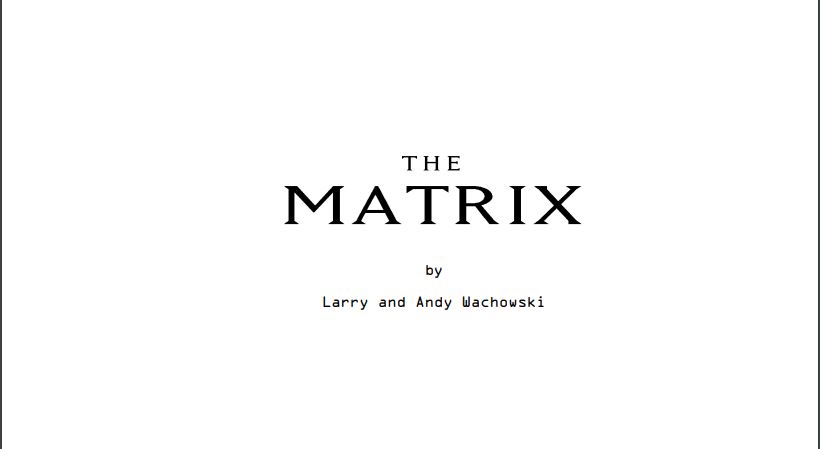
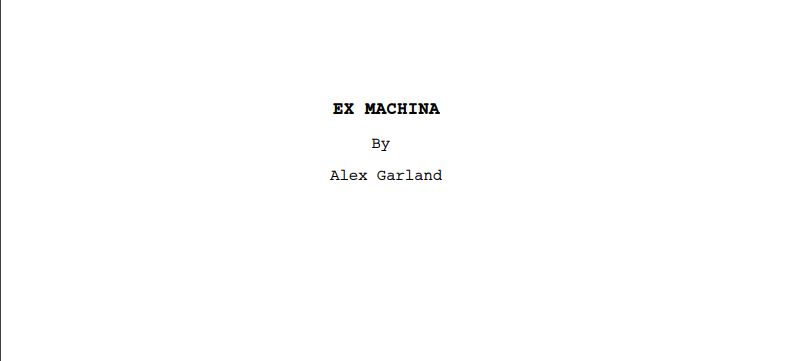
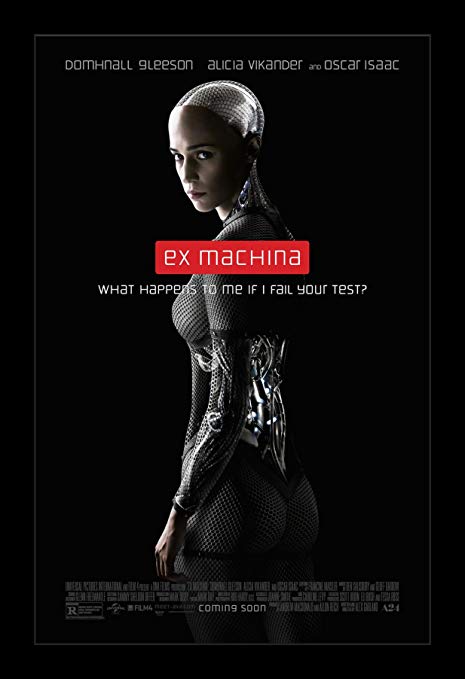
The Matrix Script & Ex Machina

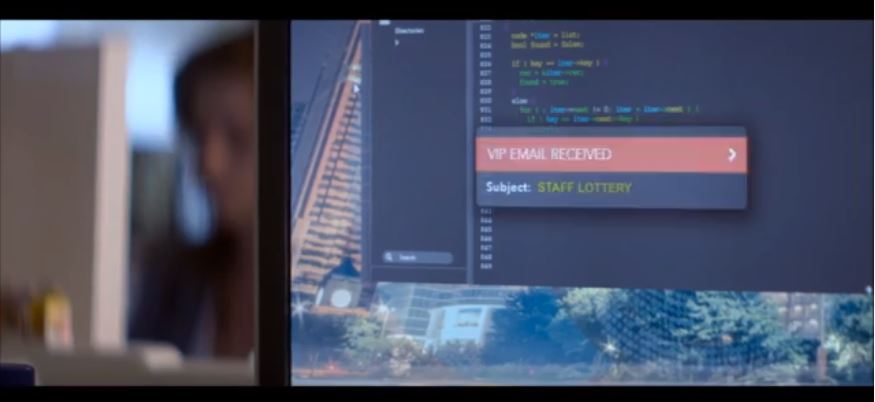
So in this post we are going to compare the scripts between The Matrix and Ex Machina. So, these are two completely different plots but that besides the point, the scripts both start out the same for being science fiction films. For example, they both start out with a computer monitor and codes reading on the computer. In the Matrix it is the neon green codes and black screen that they trickle down. In Ex Machina, we see a computer monitor that the main character sits in front of, showing codes and work that as a programmer he would understand.

Even though the are quite different, they still show that aspect of technology, which implies that technology is important to the script and the film. My point is they both that shot of computer programming codes.

Nightcrawler and Drive

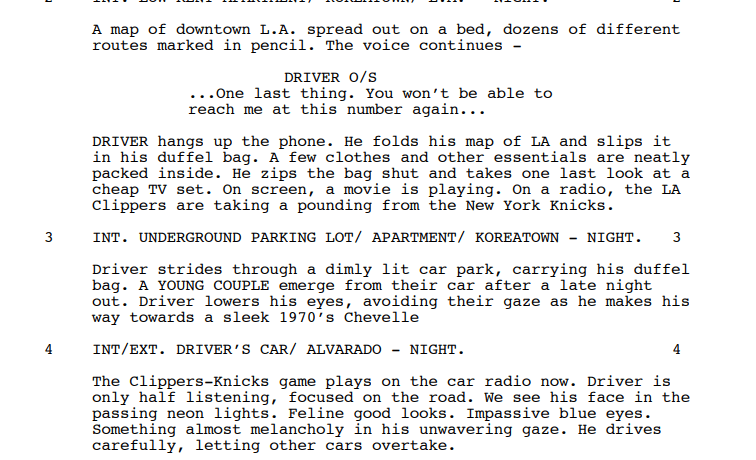
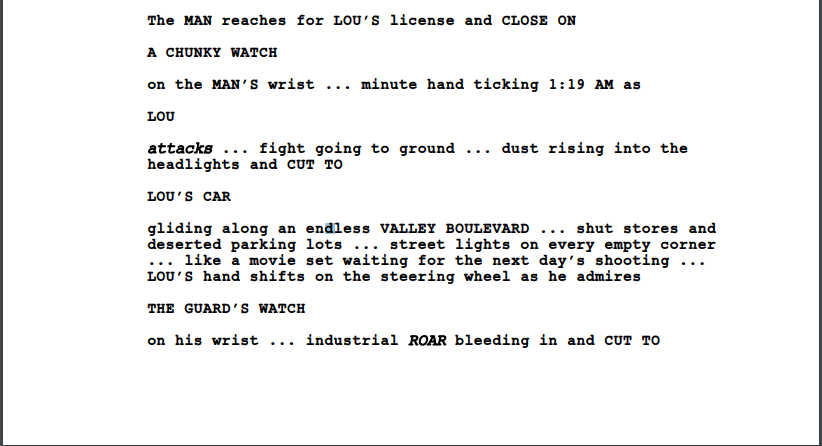
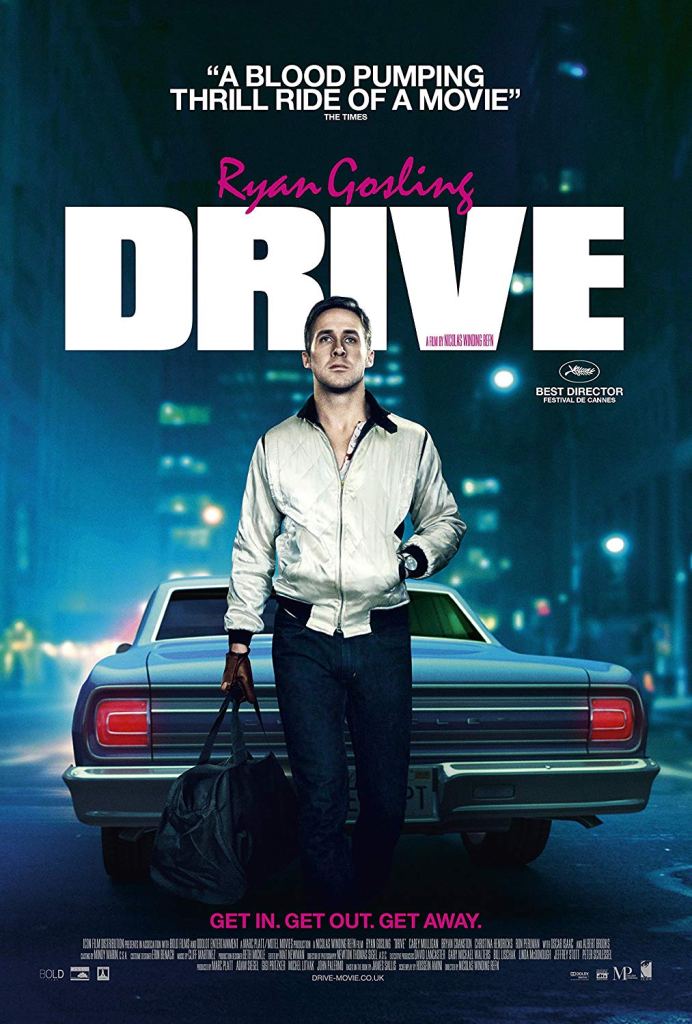
Nightcrawler and Drive have similar introductions. They both are doing mischievous and sketchy events during the nighttime in the middle of Los Angeles. We see that they both are heading to a destination in their cars and they and are loaded, Ryan Gosling has a duffel bag full of the good stuff and then Jack Gyllenhall had tools and other materials in the back of his hoopty. Also, these two neo-noir have similar plots, they both are doing criminal jobs to make extra money. Even though, they both films develop in different ways and each character has different roles, they still have the anti-hero seen in the beginning taking part of criminal activity. Overall, it’s important to note that each of these scripts have similar introductions, that can be used when developing our script and apply to our opening scene as well. From science-fiction films such as The Matrix and Ex Machina, that have similar uses of technology and to Nightcrawler and Drive who have a gritty metropolitan anti-hero criminals.

SOURCES:

http://www.dailyscript.com/scripts/exMachina_script.pdf, http://www.dailyscript.com/scripts/the_matrix.pdf, http://screenplaysandscripts.com/script_files/N/Nightcrawler.pdf, http://www.raindance.co.uk/site/scripts/Drive_%5B2010.09.24%5D.pdf

Research : Day Six

Drive- Nicolas Winding Refn (2011)

Opening Scene/Title Sequence: https://youtu.be/ZHYaj6EHfJg

Shot by Shot Analysis

The movie Drive directed by Nicolas Winding Refn (2011) is about an unnamed man, who goes by the title named the Driver. He works as a stuntman in movies, fixes cars at a garage with his friend Shannon, and for extra cash does get away for criminals in heists. Throughout the movie he gets closer with his neighbor, Irene, and her son Benicio. However, he falls in love with Irene, even though her husband is in prison. Her husband Standard Gabriel gets out of prison and Driver soon has to save Irene and Benicio from mobsters protecting Gabriel while he was in prison.

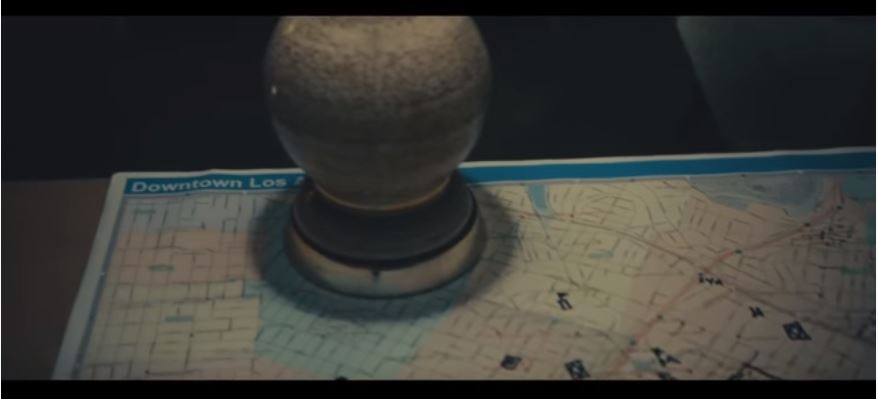
In the opening scene, we are met with a map of Los Angeles with a voice-over of a phone call between protagonist Driver and another character. This shot has a longer duration and take and does not cut off right away. By having the voice over the phone call, we able to see what the protagonist is involved with, a planned heist and crime. They talk about navigating the city, this creates tension in the beginning of the film.

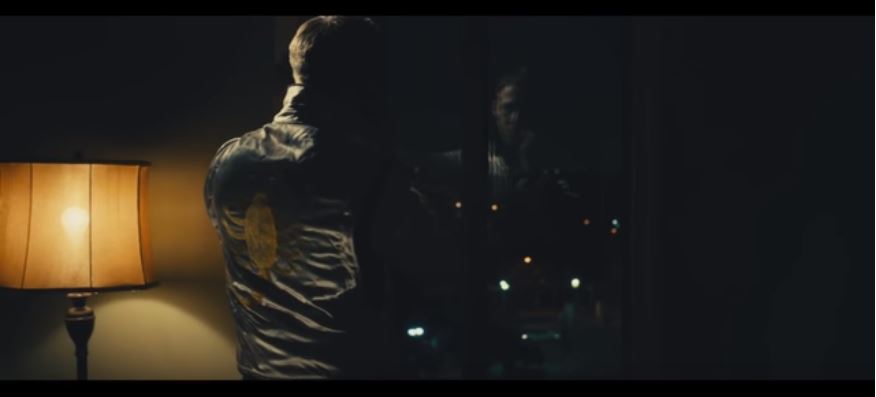
In the same shot we see The Driver from behind looking out at the urban city. The camera tilts up to see the character looking out at urban Los Angeles. This paves the way for a noir fim. We have a gritty urbanized setting, that takes place at night, where most criminal activity takes place, with an anti-hero character.

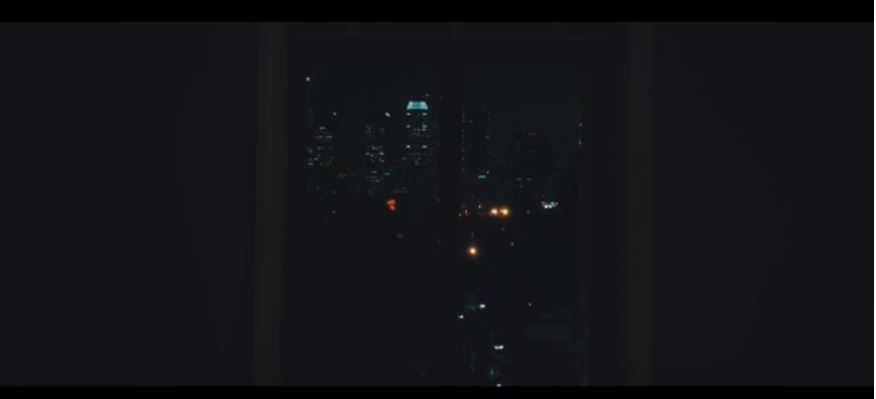
The camera cuts from the longer take and we have a zoom in on the window of the Driver’s apartment looking out at Los Angeles. This zoom is kind of suspicious because we do not know the characters actions and what kind of action is going to occur next, it heightens the tone and tension in this scene.

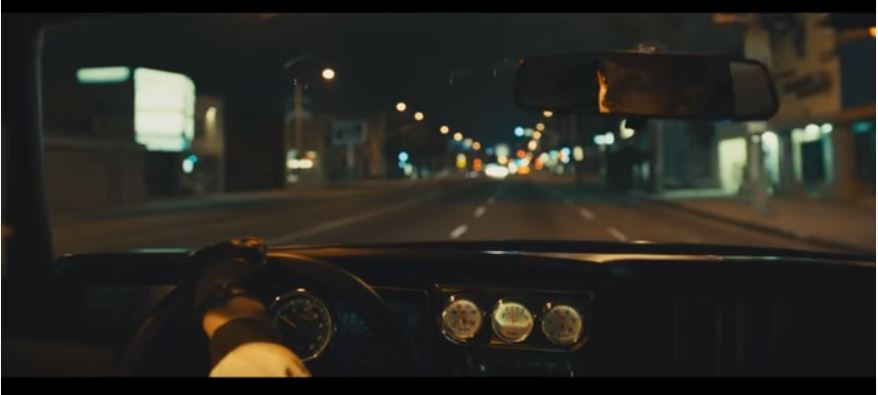
The camera jump cuts to a similar perspective of the city but through the protagonists point of view. This shot can be considered a point of view/over the shoulder shot because we are seeing the streets of Los Angeles through a perspective of The Driver and we are traveling with him to his destination. This shot is important because it shows the protagonists character, he is very focused and a man of few words, drawing the audience into the movie.

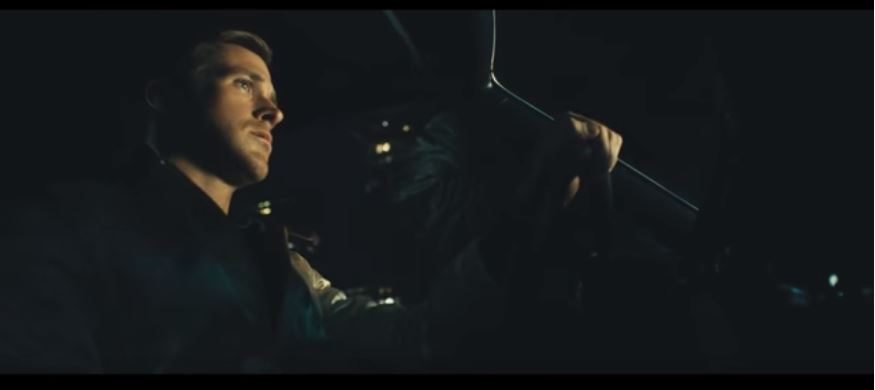
The camera then cuts to a low angle shot of The Driver. Here we have a visual of who the protagonist is, what he looks like, and his attitude. This low angle shot is significant because it shows him as a superior person, a very fierce character. This contributes to the fierce and high strung atmosphere of the film, because of the information on the heist and then seeing him as a character.

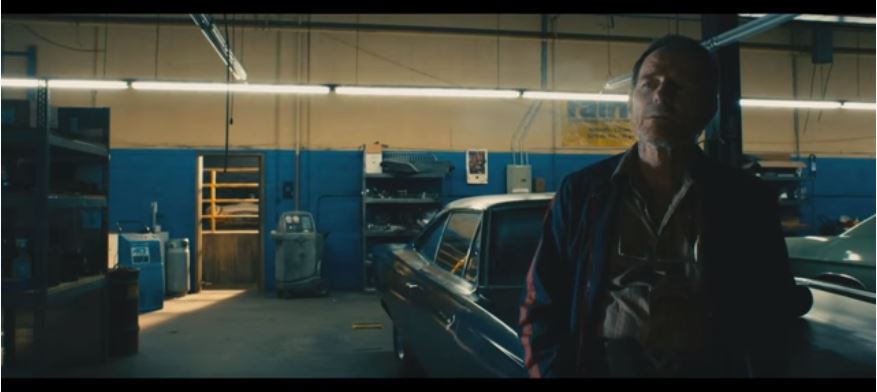
In this shot, the camera cuts to his destination before involving himself in criminal activity. We see, Shannon, a friend of the protagonist from this canted angle shot. This shot leaves off-screen space, where the Driver will arrive in the doorway in the background. This implies that Shannon was expecting him and knows the kind of work that the protagonist does for a living. In this scene, we see that Shannon helps to provide the Driver with cars, from older to even newer Chevy Impala. The camera scans over the garage, with a tracking shot, to show how big the garage is and the Drivers connections with Shannon.

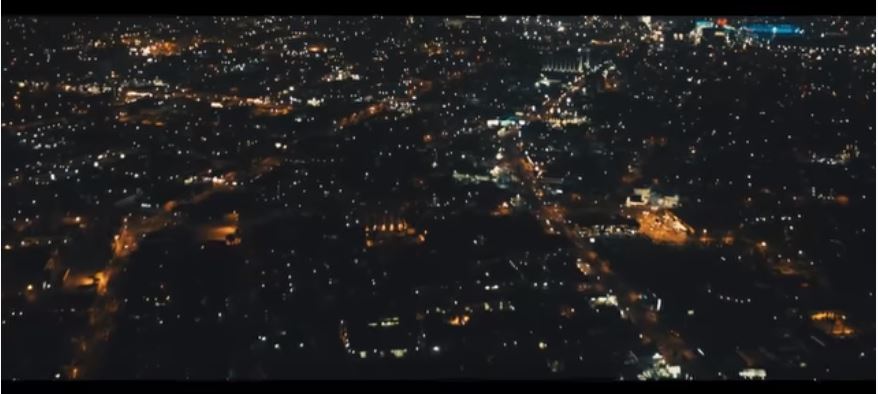
In this shot, we have an ariel shot of the city from a high altitude perspective. This instills in the audience that the protagonist can be involved with crime and get away with it because the city is so large. It establishes the setting of where the movie will be prominently be taken place.

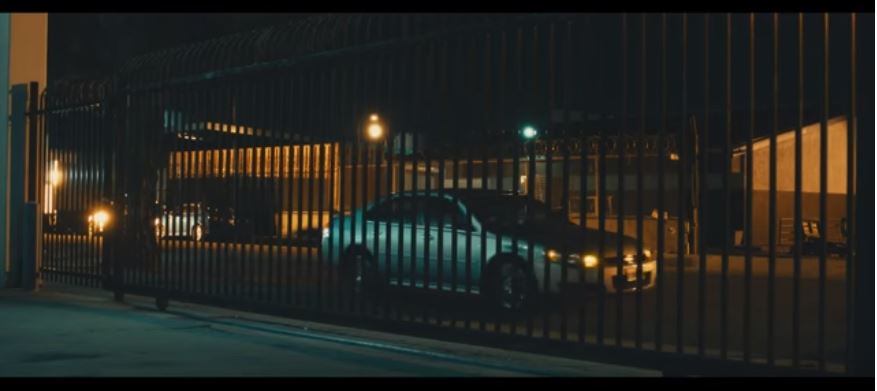
Lastly, the introduction of this film shows where the heist takes place. This long shot, shows the car and it’s surroundings. We see that this heist takes place in a sketchy area, gates all around and many alley ways. This can be compared with Nighcrawler where Lou was taking apart of crime in a restricted sketchy area himself. Overall, this film from the introduction has many elements of a noir film, the gritty locations, the anti-hero protagonist who is involved with crime himself, the large urban city terrain, and the law being the center around the crime.

Sound

The sounds that are in this film is the dialogue. This is seen through the voice-over with the phone-call in the beginning and when he is speaking with Shannon in the garage. A sound effect would be the car driving down the street, as the protagonist is on his way to pick up his new heist vehicle. You know the vroooommmm, type of thing.

Editing

Not going to lie, this movie has some long a$$ takes. Not to be informal but the beginning scene, was pretty long. This was because of the phone and the map being seen, it was to give a action and tension filled opening scene. We see a match cut from the window view of the city to the city seen through the window of the car. This was to preserve the continuity and show that the protagonist is in pursuit.

Mise-en-scene

Lastly, some mise en scene elements that could be seen in this opening scene are the annotated map in the establishing shot. Another prop was the duffel bag, the Driver hauled out of his room. Then the getaway car, he went from an oldie to a Chevy, to help preserve his identity. (he could’ve picked a better car, *cough* Dodge *cough* Challenger, but it’s whatever) The driver wears modern, everyday clothing, jeans and a guys bomber jacket.

Sources:

https://www.imdb.com/title/tt0780504/plotsummary

Research: Day Five

Ex Machina – Alex Garland (2014)

Opening Scene: https://youtu.be/pSesH2hUY0o

Title Sequence: https://youtu.be/vXrt19yBjds

Shot by Shot Analysis

Plot: The movie Ex Machina by Alex Garland is about a young man named Caleb, who works as a programmer for the world’s largest internet company. His company had a competition, in which he won, he was able to go to see the CEO Nathan. When he arrives, he is in a remote location, the mountains, and is going to be involved in a experiment where he must interact with the world’s first true artificial intelligence, which is housed in a woman’s body.

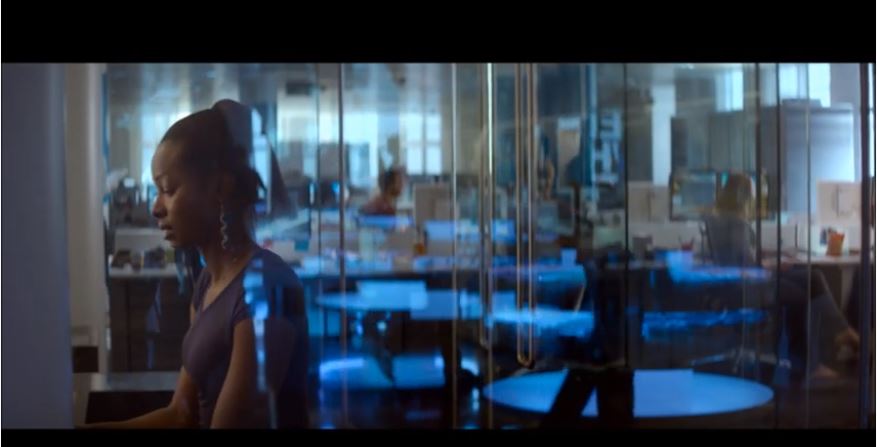
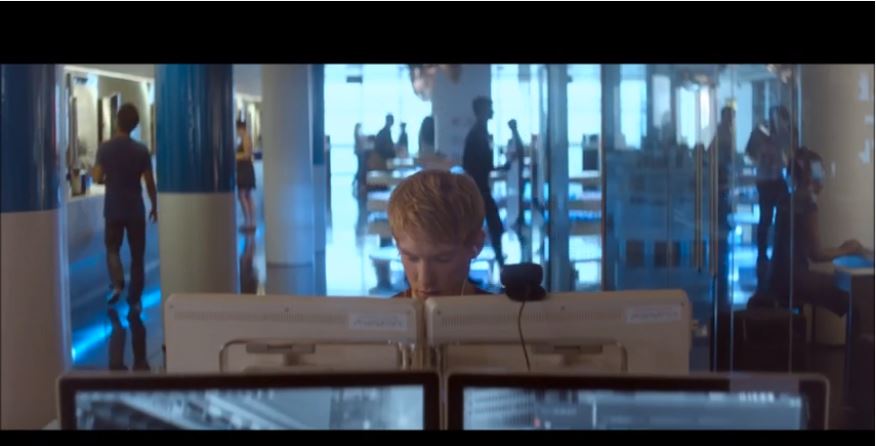
In this first shot of the film, we see the setting of the company. It is modern, you have the reflections off of the computers on the glass doors. It shows the atmosphere of being apart of a company, individualism is prevalent, since people are doing their own thing. The cinematography of this film helps to reflect the type of environment of a science fiction film, modern, revovles around tecnhology.

This shot shows the main character, Caleb, we have almost a perspective shot, we see him as someone working across from him would see him on the job. Here we see that he is on the job and involved. In the background, you have people walking and working on the job.

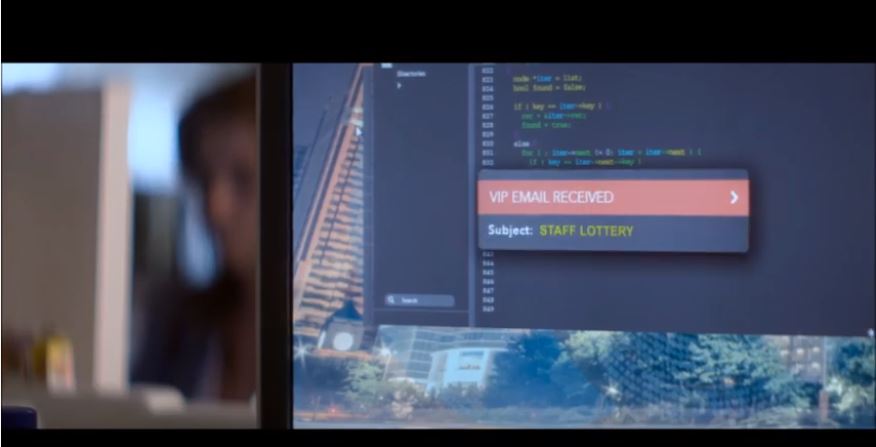
Here, we see the beginning of the action. This shot shows the computer in focus while the people working are blurred out, which is shallow focus. Few figures in the frame are in focus. Also, the framing is off in this shot, the shot is almost canted and to the side, so the computer is dominant in the frame, which means it is important.

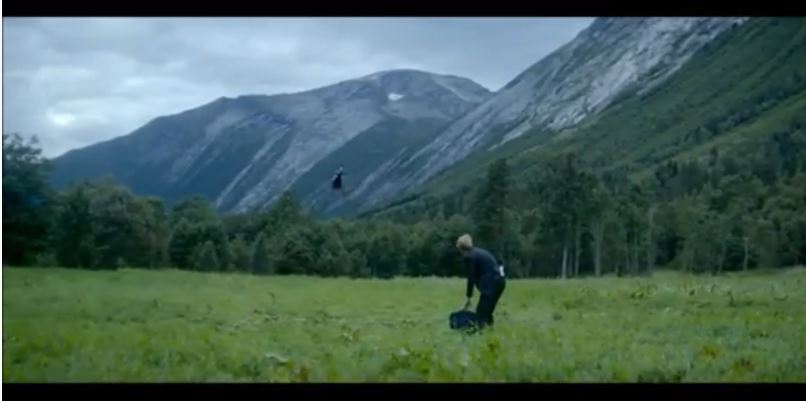
In this scene, we see a ariel shot/master shot of the helicopter flying over the rural terrain and to establish the setting Caleb is going to be in for the next few months. This shot is kind of significant because it shows he has no connection to his work place, he is alone. It helps to build the tension, since their is now action in this opening scene of the film.

In this next shot, perspective shot of Caleb looking back at the helicopter realizing he went from an urbanized area to a rural area, nobody is aware of. This kind of leaves the audience suspicious, the helicopter vanishes and protagonist Caleb is left behind, not knowing where they have taken him or what he is getting himself into. It helps to develop the plot and really build the intensity. It shows that a science fiction film, can involve advanced technology but it can be inside of our modern world and not seem so futuristic, like in Terminator.

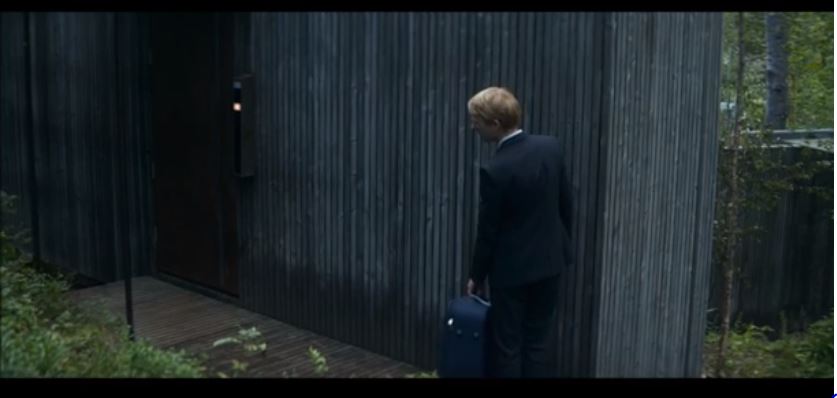
Finally, we see that Caleb has found CEO Nathan’s lab. Here, the house/laboratory calls him out as he approaches the door. We see his curiosity and hesitation in this shot, as he is unsure of this area and why this robotic door system knows his presence. The framing here is slightly off centered, the rule of thirds show that Caleb is off of the center frame. This is significant because again it show that he is hesitant and does not want to go near the door and he is keeping distance.

Sound

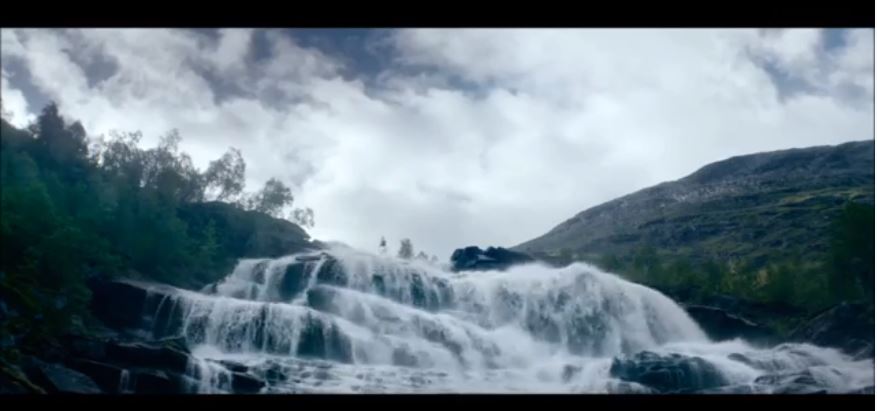
Some sounds that could be heard were on screen diegetic sounds such as those in the office, while Caleb was working on the computer. You could here dialogue and people associating, also the typing of keyboards. These were inside the world of the film and they were diegetic since they could be heard by people in the film and the audience. The helicopter flying would be a added sound effect. Ambient sounds can be heard from when Caleb is searching for his destination once in the woods, have the sound of birding chirping, the water fall. These are sounds that could be heard in the environment of the protagonists.

Mise- En- Scene

The computers are props and decor to show the modernization of the film. Caleb relies on his phone to inform everyone of his first place winning. Costuming, everyone in the office is wearing nicer attire, showing the typical office job life.

Editing

The opening cuts frequently between Caleb and his computer in the beginning. This is to show who he is as a character, he is a productive person and works on his computer a lot. The film jump cuts from Caleb in the office to him in the helicopter flying to his destination, I think this is to accomplish a good flow of the film not to drag it out, wants to get into the action.

Sources:

https://www.imdb.com/title/tt0470752/?ref_=nv_sr_srsg_0

Research: Day Four

Nightcrawler – Dan Gilroy (2014)

Opening Scene: https://youtu.be/wZj7N9botgw

Title Sequence: https://youtu.be/sntgThEj1WY

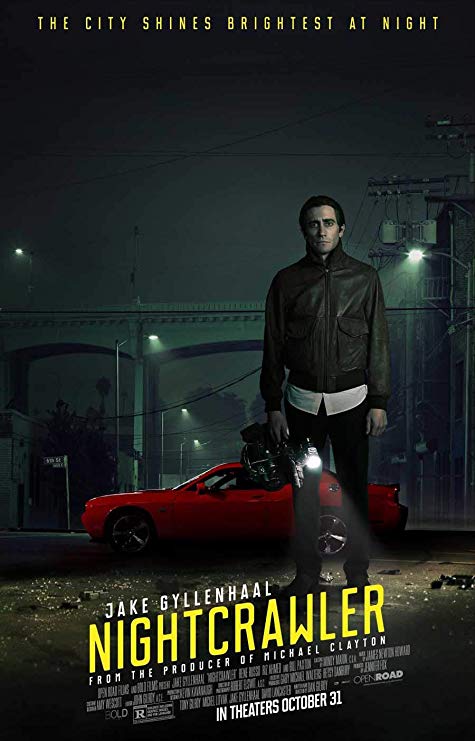
The Nightcrawler by Dan Gilroy (2014) is a neo-noir film about a young man, Lou Bloom, who is ambitious to work and he discovers L.A. crime journalism. He then finds a group of freelance camera crews who film crime scenes, crashes, fires, etc. Lou mingles his way into night-crawling which is using accidents and police incidents to make money, and make money off of the victims included in each case.

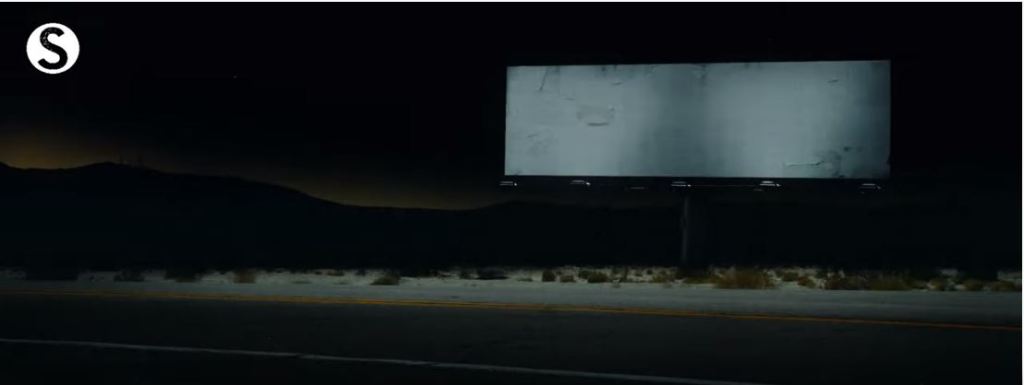
The movie starts out with this establishing scene. It has a gritty setting and takes place at night. This establishes shot, sets the atmosphere for the movie and the audience.

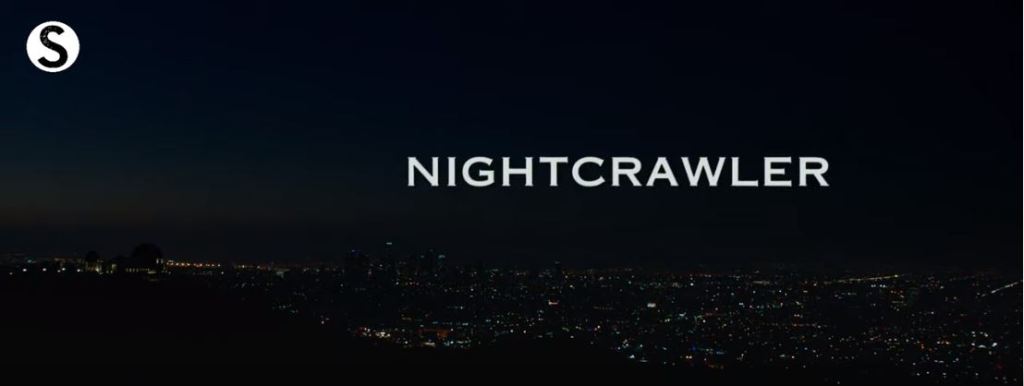
In the next scene, we see an overview of the city, this shows that the movie is going to take place in an urbanized place, one where crime is prominent. The opening scene jump cuts to different parts of this city at night time, implying that at night this urban city is slow and not as active.

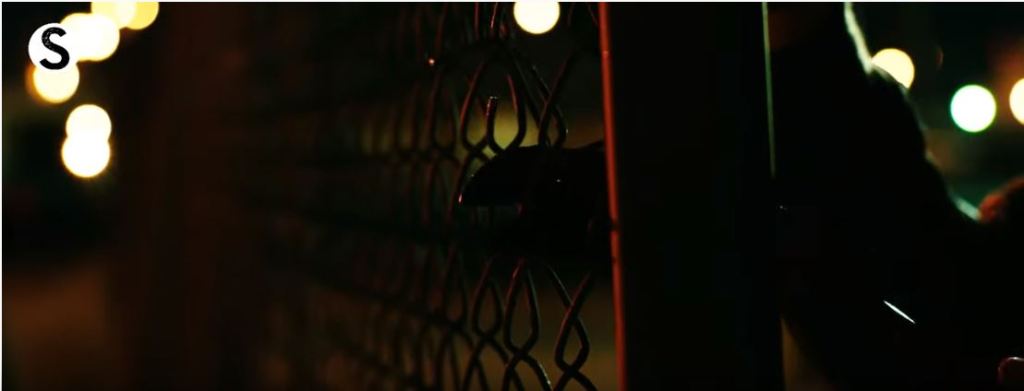
We then see a close up shot of some metal cutting pliers. This up close shot shows a characters malicious actions, cutting into a fence during the midnight. This shows action and demonstrating the night time crime that happens in a urban area.

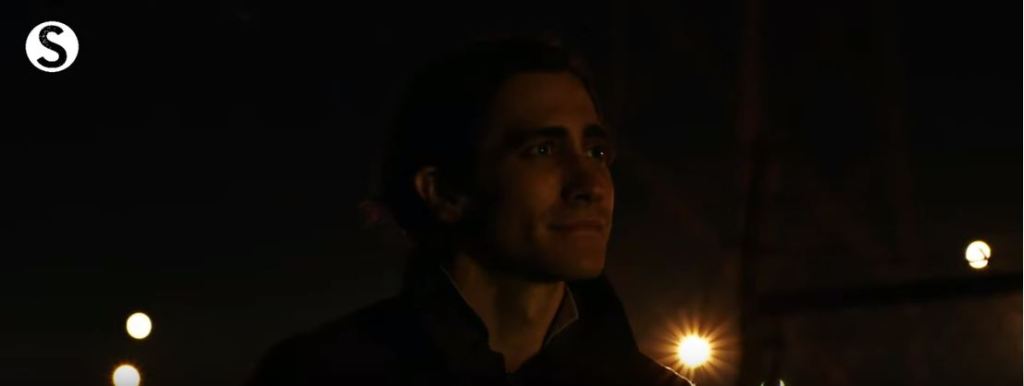
The camera then cuts to Lou Bloom played by Jake Gyllenhaal. We see in the background of this close up shot, that he is in a dark low-lit area. This portrays that this character us up to no good, crime, and is the anti-hero protagonist of this story.

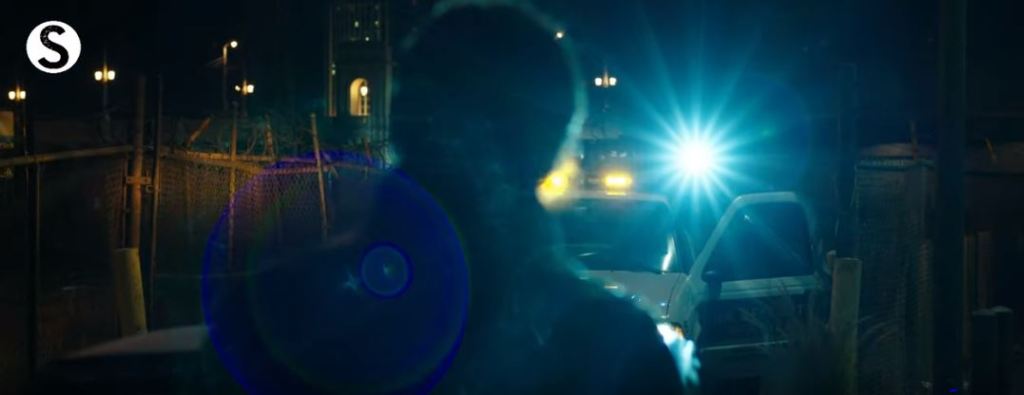
The camera transitions to an over the shoulder shot or point of view shot of the officer in front of Lou. This confirms that Lou was taking part in crime and he is against the law, not for it. We also see the abandoned area he was in, very sketchy I must say, it was broken down and restricted area of town. In the next shot, we see a long shot of Lou launching and attacking the officer, giving the audience some action into the introduction of this film. Also, going to comment of the type of car that he has. Lou is seen in a older hoopty, when your a criminal you wouldn’t was to be in a flashy car, this makes him stealthy and prone to be involved in bad stuff. Overall, the opening of this film represents a nior film, the urban setting, anti-hero protagonists, the prominent crime are all factors.

Sound

The beginning of the film has off screen sounds from within the city, the cars on the highway, the construction workers noises from equipment. This shows that this takes place in a urbanized area, that may not be as bust during the daytime, but there is still activity during the night. In addition, we have the dialogue that is being spoken between Lou and the officer before he attacks him. Then the music in his hoopty as he is driving away from the sketchy background, this would be an onscreen diegetic sound since we can both hear and see where this sound is coming from.

Editing

The editing of the opening scene, kind of montages to different parts of the city during the nighttime. I would say this because it is a collection of shots that shows each part of the city at night. When Lou is talking with the officer, we can see a shot reverse shot of them yelling at one another and Lou’s point of view of the officer having the spotlight on him. The jump cut occurs after the officer is being attacked and he is driving away from the scene, implying the officer was taken care of.

Mise-en-scene

The props would be the tools that Lou uses to break into the restricted area. The costuming, Lou wears very simplistic clothes, it makes him blend into society as a criminal. The hoopty car would be another prop, he uses that to kind of go under cover, not flash himself around.

Sources: https://en.wikipedia.org/wiki/Nightcrawler_(film) https://www.imdb.com/title/tt2872718/plotsummary

Research: Day Three

Terminator – James Cameron (1984)

Opening Scene: https://youtu.be/ZAJr5cp01mI

Title sequence: https://youtu.be/K6auDCAGJgE

In the title sequence of The Terminator, we have the actors names in a robotic and computerized font, followed by bright blue colors on a black background. Throughout this sequence, we have robotic and intimidating music being played in the background. This creates a intense atmosphere and sets this up for the movie that is in store.

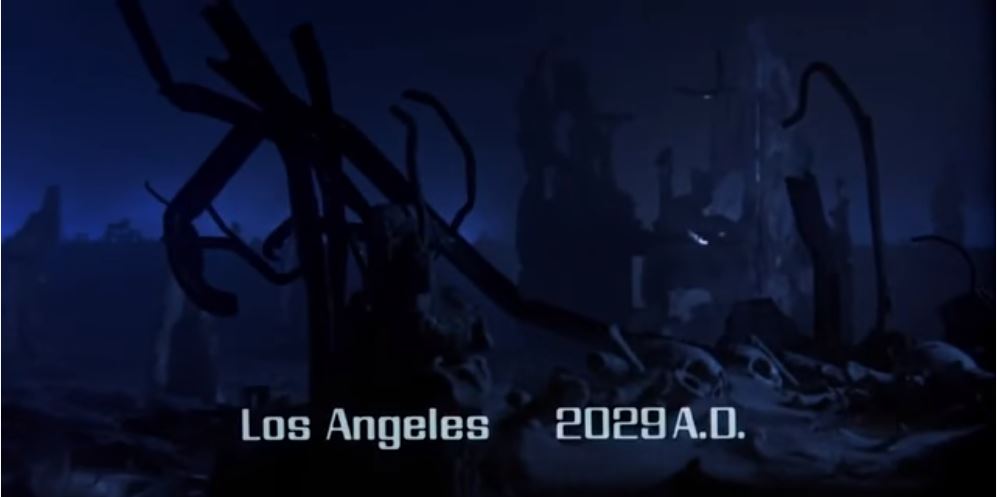
The Terminator by James Cameron opens with Los Angeles in 2029 A.D., here we see that it is covered in darkness, the infrastructure has been depleted, and the land is filled with human skulls. In the next shot, we see spaceships landing and lazes flying across the screen, showing that an machine race has dominated Los Angeles, California. (Welcome to the Hotel California, am I right?) We see in the following scene close-ups on the machines and helpless humans trying to run away from the technology that is coming for them, killing off the human race one by one. (And i rannnn, I ran so far away). Even though there the into shows little action, it draws the audience into why an machine “alien” race has taken over, and it makes the audience want to know more.

Location: Expanding more on the location of where Terminator was filmed, it was filmed in different places in California, such as South Pasadena, Little Rock, Los Angeles, etc. By filming in California, it shows an industrialized city filled with the latest technology and an possible area where advanced machines would want to attack.

Color Palette: The colors of the opening are very monochromatic and dense. The dark blues in the background, enlighten the setting to where the we can see the destruction that has been done by the machines. The white is purposeful, it gives context to the established setting.

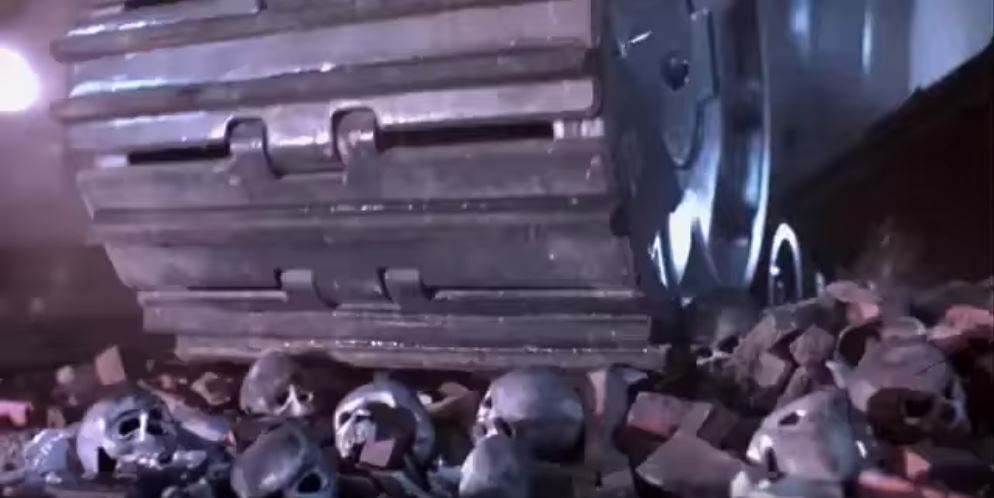
Cinematography: The pan of the ship flying over Los Angeles and having a light flashing over the land, demonstrates the determination of termination that the machines have over our world. It follows the movement of the ship and how it scouting the human race. In the next show we are seen with a extreme close up of a machine rolling over human skulls. This is significant because it shows the basic conventions of a science fiction film, advanced technology versus humanity. Also, it gives a feeling of hopelessness and destruction, that with this new technology a depleted society will follow. Next we encounter a low angle shot of the machine up close. By having low angle, we are almost seeing it form a human perspective, and we are seeing the superiority these machines have over our human race. Also, we see a lone human trying to run from the machine who is shooting at him, giving us a shaky tracking shot of the man running. The shakiness shows the panic and anxiety the human feels as he’s running helplessly from the Machines.

Sound: Pew, pew, pew pew. Literally the sounds of the Machine’s lazer guns. These on screen and diegetic sounds can be heard from inside the world. These shooting sounds imply the warfare and give the introduction some umph, meaning it creates the tension happening in the scene.

Mise-en-scene: the props would be the human skulls the machines roll over, the destroyed infrastructure, the machines roaming about Los Angeles, the guns the guy is running with. These help to make the science-fiction setting come alive and clearly demonstrates the future.

Research: Day Two

Matrix Opening Scene

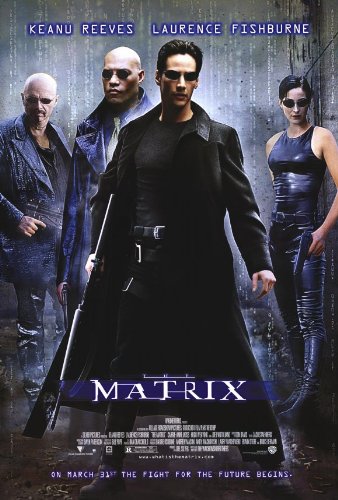
Iconic Matrix Movie Poster to bless your eyes.

In the opening scene and first two minutes of the film, we in the establishing shot the vertical number computer code accompany by a voice over between two characters whose identities are to be yet revealed. This adds to the mysterious feel and kind of gives the audience a feeling like woah. This establishing shot is important because the overall movie is based on codes and computers, so it sets up the theme and setting for the movie. In addition the scene then zooms in on the codes/numbers and turns into a graphic match cut from the 0 to a flashlight. This shot demonstrates the travel from the matrix portal to the simulated reality of the world. By having this shot, we see that the matrix revolves around technology and the technology “reality” is what gets you in trouble in the simulation. So, the cut is significant because it shows that transition and switches to the action that is going to occur in this scene. Next, we see a dark edgy hallway lit up by police officer’s flashlights and them moving in on a target. This shot creates tension, by having a dark monochromatic palette to create the atmosphere and by using props such as guns. The guns, flashlights, imply that this target is serious and something is about to occur in the plot. Then, we see a pan of an officer to the door they are crowded around. When the officer kicks down the door, we are introduced to main character Trinity, who is caught in the action of hacking into a line of connection. Her costuming distinguishes her from the rest of the world and shows she comes from a different world, “reality” and she is currently in the simulation. Overall the scene has the science fiction conventions which are technology versus humanity, it has the computer codes in the beginning showing that this takes place in the future, and that this is nor ordinary film.

Group Discussion

The group and I met up at Dunkin’ Donuts yesterday to discuss where we want out film to go, and clarify questions that we all had. We outlined questions and answers to those questions. Some of the basic general question we covered are:

What kind of movie am I trying to make?

We want to create a science fiction/ neo noir film. The possible plot devices we thought of were: Travel between dimensions. As a group we discussed under developed plot: Simulation is getting glitched/has a virus and Doors transport to different locations. [this was was very cool and it could work ;)]

What do the opening sequences look like in other films of my genre? How does an opening sequence reveal meaning and tone without giving away too much? How much action really happens in the first 2 minutes of a film?

Although this was general and we will individually have an in-depth analysis of opening scenes from films , we brought up that suspicion and mystery are definitely portrayed in the opening scenes. Action is shown first before story begins, to give the audience a glimpse of what the film will consist of and draw them in. We will need to at least introduce part of the plot at the end to not confuse any body.

What are the settings or locations of other films in my genre? Where and when are they often shot?

Noir films are mostly shot at night and in shot in urban area. In science fiction, however, for our purposes, would be reality. It can be “futuristic”, but with simulation, the setting can be modern with futuristic characters. This should allow us to shoot in local locations. We should probably use a gimbal or a tripod of some sort to stabilize our shots. We likely need a greenscreen for some visual effects with our shots. (looks like amazon will be our best friend)

Who is the intended audience for my film? Why? What are their movie going habits? How will I get them to see my movie?

Nerds. (Nerds are pretty great people) and people from the 90’s, since the 90’s had many iconic science fiction films. Also, it would consist of teenagers and young adults, people who have a big sci-fi addiction.  We are choosing these people because they are the most likely to bring us profits, or in other word $$$$. For theaters, platforming release, release it in California, New England, possibly Chicago, big cities and large metropolitan areas can help our film gain attention. Also release it on streaming, attempt to get on Netflix after platforming. We could market the movie by creating a alternative reality game, making mysterious social media platforms and website links. For example, have Instagram ads that only show a link to a mysterious website. (click bait, oh yeah)

What do the titles normally look like for films in my genre (style, size, font, etc.)? What kinds of information do I need to include in the titles?

B O L D

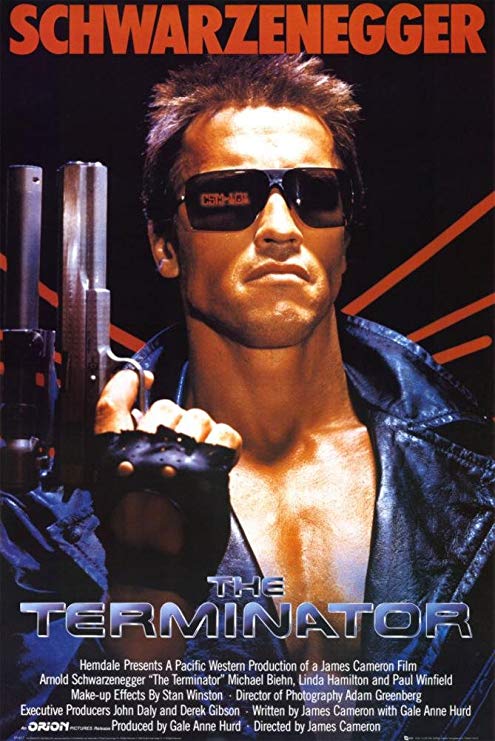
From many movie posters we have seen, the letters are in bold font and typically have a short name. Very stark name, like Terminator, Alien, you get the gist. They are very separated, example up above ^^^^^

How are different social groups normally represented/portrayed, stereotyped, etc. in your genre?

Normally, white male writers don’t pay attention, so it’s normally just white people. However, we will try to avoid that. So Fares is an actor :). It’s likely that Kevin and Fares will be our actors. Kevin is straight outta Albania, so we gonna have a cultural party in our film. Females are usually not portrayed deeply and males leads having that superiority and tough character.